• Skip to primary navigation
  • Skip to main content
  • Skip to primary sidebar

Circuit Crush

Learn Electronics & Microcontrollers

JOIN THE ACADEMY FOR ARDUINO SIGN UP NOW!
  • HomeBack to Start
  • AboutWho is Brian Jenkins?
  • Electronics BlogElectronics & Computers
  • Arduino BlogAll about Arduino

Electronics

Conventional Current vs. Electron Flow: Which is Correct?

22 Comments

Conventional Current Flow vs. Electron Flow – Which is Right?

The debate rages on. Some say conventional current flow is correct. Others insist that electron current flow is right.

Let’s bust this thing wide open. [Read more…] about Conventional Current vs. Electron Flow: Which is Correct?

Types of Batteries & How They Work Part 2: Rechargeables

2 Comments

Types of batteries

Types of Batteries & How They Work Part 2

Types of batteries and how they work, part 1 went into a bit of battery history followed by a general overview of how batteries work with a discussion on battery capacity and ways to connect them. Next, the post went into some details of primary battery types and chemistry.

This time around, we’re going to talk about secondary batteries, also known as rechargeable batteries. [Read more…] about Types of Batteries & How They Work Part 2: Rechargeables

Let’s Get Crystal Clear: A Primer on Crystal Oscillators

8 Comments

Quartz crystals used in electronics

The crystal oscillator is everywhere. The need for precise frequency control sets the stage. Crystals ensure not only accurate timing for microprocessors and microcontrollers, but also in setting the frequencies of any radio or wireless device.

Sure, you can make an oscillator out of capacitors, inductors, and resistors but their limitations are severe. [Read more…] about Let’s Get Crystal Clear: A Primer on Crystal Oscillators

3 Common Mistakes All Electronics Hobbyists and Enthusiasts Make

1 Comment

3 Mistakes Electronics Hobbyists Make

Electronics hobbyists and enthusiasts are a very dedicated bunch. I should know, not only am I an enthusiast, I’m an EE.

In many of my posts, I talk about various topics on electronics and occasionally computers (they are electronic, after all). This time I wanted to do something a bit different and talk about the hobby itself rather than discuss some type of component, protocol, or electrical theory. In that vein, this post will be a bit shorter than some of the others, but no less important if you’re an electronics hobbyist or enthusiast.

Below are three common mistakes I’ve seen many electronics hobbyists make. I’ve also made some of them myself. To help you avoid these mistakes, I list them and then go into some detail about each one.

Be sure to read all three (short) mistakes. At the end, I have a special bonus for those who are interested.

[Read more…] about 3 Common Mistakes All Electronics Hobbyists and Enthusiasts Make

An Introduction to 555 Timers

Leave a Comment

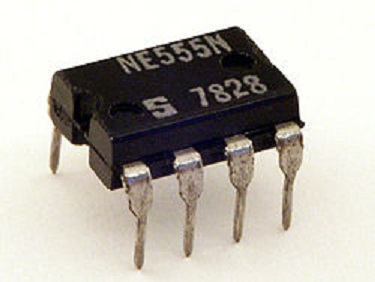
555 Timers

555 Timers — The Basics

What even mildly-seasoned electronics geek has not used or at least heard of the 555 timer?

Few, as 555 timers have been around since the early 1970’s.

The timers are great for creating pulses of varying widths, among other things.

Why not use a microcontroller instead?

For one thing using an Arduino or a PIC just to create pulses is like killing a mouse with a hand grenade. It works, but it’s an extreme over-kill.

Second comes cost. I talked about the cost of some popular “trainers” like the Arduino in my post about working directly with microcontrollers vs trainers. A 555 timer can be purchased for about $0.35 in quantities of one. Buy more and the price drops.

Things like PICs and trainer boards are not only more complex to work with, they take up more real estate and power than a tiny 555 chip.

There is a myriad of other uses for the timers including switch debouncing, tone generators, triangular waveform generators, a voltage controlled oscillator and more. In fact, people are still coming up with new used for these ICs to this day.

[Read more…] about An Introduction to 555 Timers

Types of Batteries & How They Work Part 1

1 Comment

Types of batteries and how they work

There are many different types of batteries, and they are an invention that, believe it or not, dates back several thousand years.

What appears to be ancient batteries have been unearthed in what is now Iraq. These batteries were made of clay jars filled with vinegar. An iron rod surrounded by a copper cylinder was placed in the vinegar. These ancient cells typically produced 1-2 volts.

What ancient Iraqis would have done with 2V remains somewhat of a mystery, but the invention of the first “real” battery is credited to Alessandro Volta around 1800.

Why Volta and the not ancient Iraqis?

For one, no one knows who the original designer of the ancient battery was.

Secondly, it’s likely that Volta had at least some rudimentary understanding of how his battery worked, while no one’s sure if the ancient Iraqis did or if they even used it as a battery at all. The verdict on what exactly this artifact was intended for is still out.

Of course, Volta’s battery (and the ancient versions) were nothing like the batteries you’re used to working with today.

[Read more…] about Types of Batteries & How They Work Part 1

  • « Go to Previous Page
  • Page 1
  • Interim pages omitted …
  • Page 5
  • Page 6
  • Page 7
  • Page 8
  • Go to Next Page »

Primary Sidebar

Copyright Custom Computer Solutions, LLC© 2026